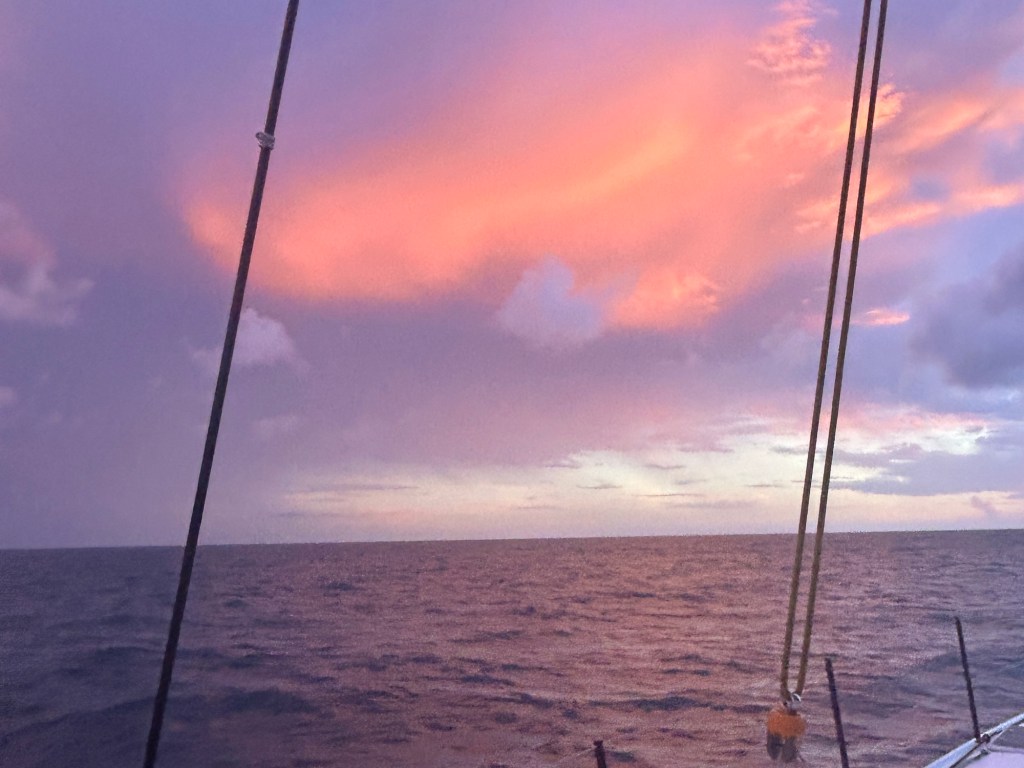
When I was writing last week’s post about the trip that ended (for me) in Key West, I had a few people ask me, “What made that trip worthwhile?” I tried to answer that question . .while I was writing about the importance of keeping up with the weather. It became too much and too off topic. I decided to do a separate post about the trip to try and answer that question because it is more than just “I enjoyed the time sailing”. It really was about the opportunity to learn from someone for experienced than me.
When I signed on to the venture, I was excited about the prospect of crossing the Gulf of Mexico. It’s not a long trip, maybe 7 days. Still, we’d be crossing a decent sized body of water. We would be a couple of days from land for a while as well. The experience of sailing with someone who’d crossed the Atlantic already would be a great experience.
One thing that has been a cause of a bit of anxiety is navigating the bridges in Jacksonville. There are a couple that we will have to call to get them to open because our mast is too tall. On the way out of the marina to the Atlantic, I had this anxiety allayed. We planned our departure so that we were going against the tide. That way if we needed to wait for the bridge to open, we could use the motors to hold our position against the current. You pull over a little to the side of the river. Then let the opposing forces keep you in one place. Once the bridge opens, you rev the engines a bit and off you go. I didn’t get to be at the helm when we were doing this, but I know how to do it and I know I can.
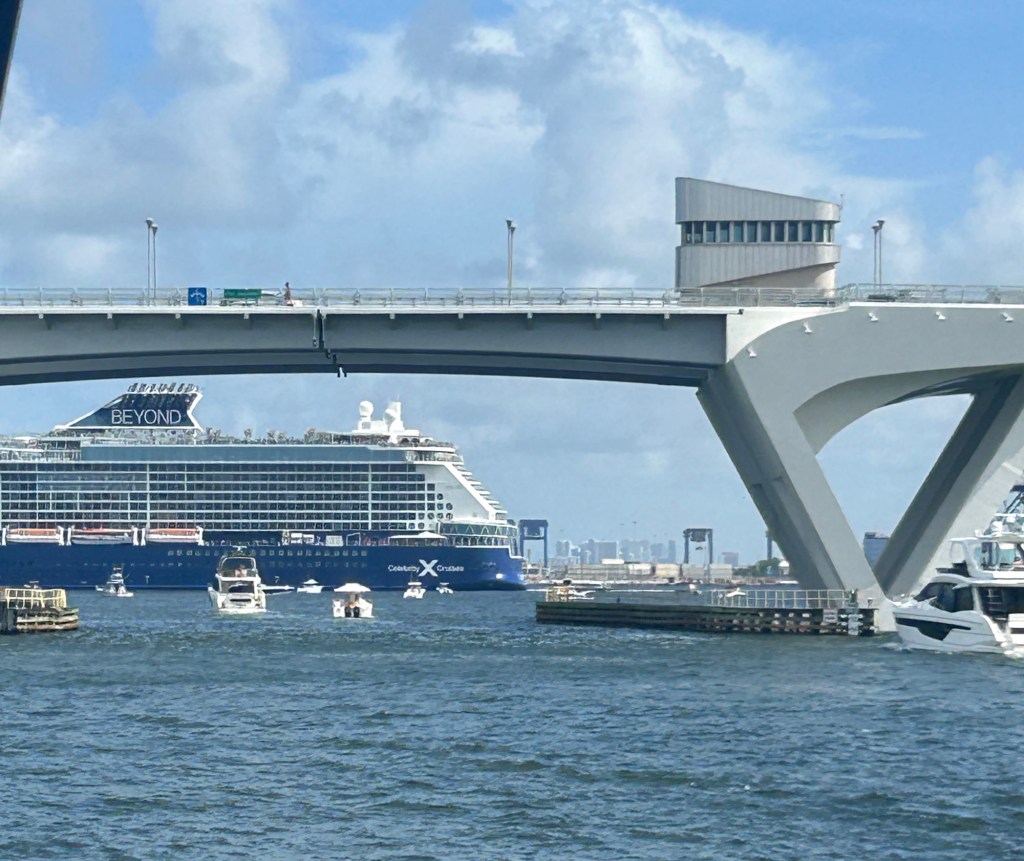
Being able to experience a variety of weather and ocean conditions was also a key aspect of this trip. When we entered the Atlantic and headed south, conditions changed pretty dramatically from motoring downriver. The wind and current were coming from opposite directions. This caused the waves to be about one to two feet, which isn’t very big. But, because of these weather conditions, the boat was moving on almost every axis, which taught me to always keep three points of contact when walking around!
Last week I mentioned that once we rounded into the Strait of Florida, conditions changed. It was amazing! The boat would lift gently with the waves and slide us down as they passed us by.
The first night off of my shift, I chose to sleep in the cockpit. Adjusting to the motion of the boat took time. I remembered my grandmother always saying, if you aren’t feeling 100%, stay on deck. That advice never failed me. You can see the horizon, you have the breeze over you. It really does help you feel better. I did end up going below later in the night as a squall drenched the cockpit!
Wind angle is also a key aspect of sailing. As long as the wind isn’t coming head on, you can likely find an angle that will let you go in the general direction you want to go. But, you have to keep an eye on the sails and the wind and make adjustments as needed. It’s not always easy, because you also have to keep in mind that the current can be pushing you in a direction that you don’t want to go or that will change the angle of your boat to the wind. Sailing close to shore, find a landmark that will allow you to keep the angle you’re looking for…offshore…watch your compass and your chartplotter!
Having the experience of a sailor who had been all over the Mediterranean and crossed the Atlantic gave me some ideas about how to do things differently than what we were taught in our classes. The American Sailing Association teaches that you should use a cleat hitch to tie up a boat. The Royal Yachting Association teaches an oxo. There are advantages both ways. I appreciated the simplicity of the oxo when we were leaving the dock for refueling! Things went so much faster using that knot.
The other big thing I picked up was the idea of downwind reefing. Reefing is bringing down the mainsail a little bit to slow your boat down. You put a reef (or two or three) when there’s too much wind or when you are expecting too much wind. We learned that if you are putting a reef in underway, you should turn the boat into the wind to depower the sail and then you can lower the mainsail to the reefing point.
Using a topping lift on the boom, you can reduce pressure on the mainsail enough that you can start to drop it and successfully put a reef or two in if need be. I have done some research and it’s a bit of a controversial move. Some people think it’s a dangerous maneuver. Others love it because you can keep your forward momentum and not lose time and ground while you are sailing.
Being with others who know more than you and being willing to learn from them provides you with skills that you can carry forward in your ventures. It doesn’t matter whether it’s sailing, woodworking, cooking, you name it. Humility provides us with great opportunities for learning!

 The Great Wander
Leave a comment